How to Dry Filament: Temperature, Time, and Equipment Guide
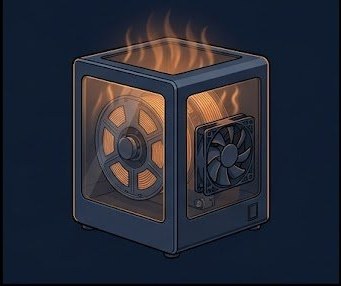
Moisture absorption is the single most preventable cause of failed 3D prints. Every hygroscopic filament — including PLA, PETG, TPU, ABS, ASA, and Nylon — will absorb ambient humidity through the spool itself, causing steam bubbles, rough surface texture, brittle layers, and random extrusion gaps during printing. This guide covers the correct drying temperature and duration for every major filament type, plus equipment recommendations to keep your spools print-ready.
Drying Temperature and Time by Material
Use the reference table below as your baseline. For spools stored open for more than one week in a humid environment, add 25% to the drying time shown.
| Material | Drying Temp | Drying Time | Signs of Moisture |
|---|---|---|---|
| PLA / PLA+ | 45–50°C | 4–6 hours | Bubbling, rough surface, brittle strands |
| PETG | 65°C | 6 hours | Popping sounds, heavy stringing, foggy extrusion |
| TPU / TPE | 55°C | 6 hours | Bubbles mid-strand, surface pitting, weak bridges |
| ABS / ASA | 65–70°C | 4–5 hours | Layer delamination, rough surface texture |
| Nylon (PA6 / PA12) | 80–90°C | 12 hours | Heavy bubbling, catastrophic stringing, foam-like extrusion |
| Silk PLA | 45°C | 4 hours | Loss of sheen, rough surface, brittle strands |
| Polycarbonate (PC) | 80–90°C | 8–12 hours | Hydrolysis cracking, white haze in extrusion |
Equipment Options: What Actually Works
A dedicated filament dryer is the single most impactful tool for consistent prints. The Sunlu Filadryer S2 holds accurate temperature with a circulating fan, accommodates standard spools, and includes a pass-through hole for drying-while-printing. It is the dryer referenced throughout this guide.
View Sunlu Filadryer S2 on Amazon →As an Amazon Associate, FilamentBase earns from qualifying purchases. This recommendation is based on performance, not compensation.
A standard kitchen oven is the most common mistake. Domestic ovens cycle heat in large bands of 10–20°C above and below the set temperature, which easily warps plastic spool flanges. Use one of the following instead:
Option 1: Dedicated Filament Dryer (Best)
Purpose-built dryers like the Sunlu Filadryer S2 and Creality Space Pi hold accurate temperatures with a circulating fan. They accept a standard spool, display live temperature, and allow drying-while-printing through a pass-through hole. Cost runs $30–60 USD. For a multi-spool workflow, buy two.
Option 2: Food Dehydrator (Good)
A round food dehydrator with removable shelves works well for most materials up to about 70°C. Remove the interior trays to fit a spool, verify the actual temperature with an oven thermometer, and run the same times shown in the table above. Avoid models with a fixed bottom heating element that creates hot spots — look for a rear-mounted fan.
Option 3: Convection Toaster Oven (High-Temp Materials Only)
For Nylon and PC that require temperatures above what most dehydrators reach, a convection toaster oven with a verified probe thermometer is the only household option. Set it 5°C below your target, confirm with the probe, and never leave it unattended with plastic filament inside.
Storage After Drying
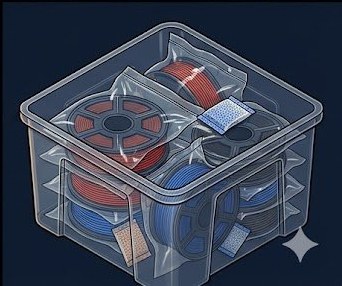
A dried spool re-absorbs humidity in under 24 hours in a 60% RH environment. Store spools in sealed zip-lock bags with at least two silica gel packets per spool. Color-changing silica gel beakers (blue-to-pink) let you monitor saturation at a glance. Rechargeable desiccant canisters can be baked at 100–120°C to regenerate them for reuse.
How to Detect Wet Filament Without Printing
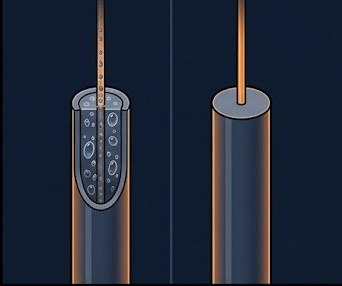
Listen to the spool when you first feed it. Dry filament extrudes with a consistent, near-silent hiss. Wet filament pops and crackles as steam escapes. You can also flex a short strand: dry PLA snaps cleanly, while moisture-saturated PLA bends slightly before breaking due to plasticization from absorbed water molecules.